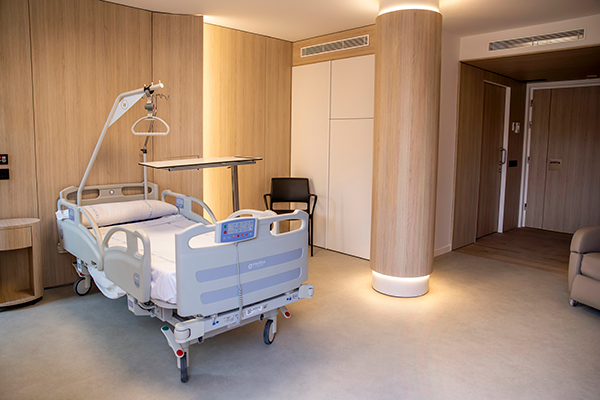
If the reason for admission to the Clinic is surgery, please follow the nursing team's instructions:
A) FOR ADULT SURGERY
When you are admitted to the Clinic, our team will be at your disposal and will do our best to make your stay as comfortable as possible.
Once your admission date has been confirmed, please report any change in your health (fever, productive cough, pregnancy...) especially if it occurs the day before surgery, by calling 93 874 40 50, Ext: 2960 from 9 a.m. to 8 p.m.
Advice before arriving at the Clinic
- Follow your doctor's instructions regarding your usual or pre-operative medication.
- You may remove hair from the surgical area using depilatory cream 4-5 days before surgery or wax one week before (provided you are not allergic to these products).
- You should shower the night before surgery and wash your hair with your usual shampoo.
- You must fast (no solids or liquids) for 8 hours before the scheduled surgery time as instructed by your doctor. If surgery is scheduled in the afternoon, you may have a light breakfast at 7 a.m. After that time you may not consume anything, solid or liquid.
On the day of admission
- You must arrive on time at the admissions desk at the indicated time.
- Admissions staff will place an identification wristband with your name on your wrist; you must wear it throughout your hospital stay so that healthcare professionals can verify your identity at any point in your care for your safety.
Required documentation
- Bring all documentation related to the surgical process (diagnostic tests, reports, blood tests, informed consent...)
Pre-surgical hygiene
On arrival at the inpatient unit you must shower following the nurse's recommendations; she will also provide the antiseptic soap to use.
- Do not wear nail polish or makeup.
- Do not wear any jewellery (rings, earrings, chains, piercings...)
- Remove all items such as glasses, contact lenses, wigs, dental prostheses...
What you will need for your hospital stay
- Nightdress or pyjamas
- Underwear
- Dressing gown
- Slippers (securely tied and closed if you are having lower limb surgery or have difficulty walking)
- Toilet bag with personal hygiene items
- If you wear a dental prosthesis, bring a container to store it.
- Your usual medication.
Named nurse
During your stay at the Clinic you will be assigned a named nurse who will introduce themselves and ensure continuity of nursing care for your admission.
Pain assessment scale
During your hospital stay, the nurse will teach and explain the pain assessment scale.
You will be asked to rate your pain from 0 to 10 (0 no pain, up to 10 the maximum pain you can tolerate).
It is important to express your pain and ask the staff caring for you to assess it. Knowing your pain level will help staff find individualised treatment and evaluate its effectiveness.
B) FOR PAEDIATRIC SURGERY
When your child is admitted to the Clinic, our team will be at your disposal and will do our best to make their stay as comfortable as possible.
Once the admission date has been confirmed, please report any change in your child's health (fever, sore throat, productive cough...) especially if it occurs the day before surgery, by calling 93 874 40 50, Ext: 2960 from 9 a.m. to 8 p.m.
Advice before arriving at the Clinic
- Follow your doctor's instructions regarding your usual or pre-operative medication.
- You should bathe your child the night before surgery and wash their hair with their usual shampoo.
- On the day of surgery you must bathe your child again before coming to the Clinic.
- Fasting:
> Under 12 months
- If breastfeeding, the last feed must be 4 hours before surgery.
- If taking formula or bottle feeds, the last feed must have finished 6 hours before surgery.
- Small amounts of water may be taken up to 2 hours before surgery.
> From one year of age
- The night before, your child may eat a normal dinner and up to 6 hours before surgery may have a small solid such as yoghurt.
- Up to 2 hours before surgery, small amounts of water may be taken.
On the day of admission
- You must arrive on time at the admissions desk at the indicated time.
- Admissions staff will place an identification wristband on the child's wrist; it must be worn throughout the hospital stay so staff can verify their identity at any point for their safety.
Required documentation
Bring all documentation related to the surgical process (diagnostic tests, reports, blood tests, informed consent...).
Before going to the operating theatre
- Do not use body cream, cologne, deodorant, nail polish or any jewellery (rings, earrings, chains, piercings...)
What you will need for the hospital stay
- Nightdress or pyjamas.
- Underwear.
- Nappies, if used.
- Slippers
- Toilet bag with personal hygiene items.
- Formula milk, if special milk is required (hypoallergenic, intolerance...)
- Usual medication, if applicable.
Named nurse
During the stay at the Clinic, your child will be assigned a named nurse who will introduce themselves and ensure continuity of nursing care.
Pain assessment scale
During the hospital stay, the nurse will teach and explain the children's pain assessment scale.
In older children the scale runs from 0 to 10 (0 no pain, up to 10 maximum tolerable pain)
In young children pain is assessed using faces (a happy face means no pain, up to a very sad face meaning maximum pain).
It is important that your child expresses their pain or that a responsible family member helps them do so. Knowing their pain level will help staff find individualised treatment and evaluate its effectiveness.