
What is and when is orthognathic surgery indicated?
Dr. Javier Mareque, coordinator of IOMA, explains this surgery to correct the position of the jaw bones and treat joint problems or sleep apnoea
Many people have jaw problems that, if not corrected in time, can cause health complications. In some cases these anomalies can be corrected with conventional orthodontic treatment, but others require moving the skeletal bases and, therefore, surgical intervention: orthognathic surgery.
According to the coordinator of the Advanced Dentistry and Maxillofacial Institute (IOMA) of Clínica Sant Josep, Dr. Javier Mareque, the ideal way to bite "can be compared to the functioning of a shoe box. The upper teeth must be above the lower ones, but there are people who, due to a growth anomaly, have their teeth or jaw bones pulled forward or backward". These abnormalities are known as prognathism (prominent chin) and retrognathia (the lower jaw is backward compared to the upper).
In these cases, the dentist advises orthodontic treatment to move the teeth and, if necessary, orthognathic surgery to correct the position of the bones. This surgery will help to modify "an incorrect bite or a misaligned jaw", adds Dr. Marek It is also indicated to achieve facial symmetry and treat the following deformities and conditions: narrow palate, gingival smile, open bite or excessive wear of the teeth, among others.
What exactly does this intervention consist of?
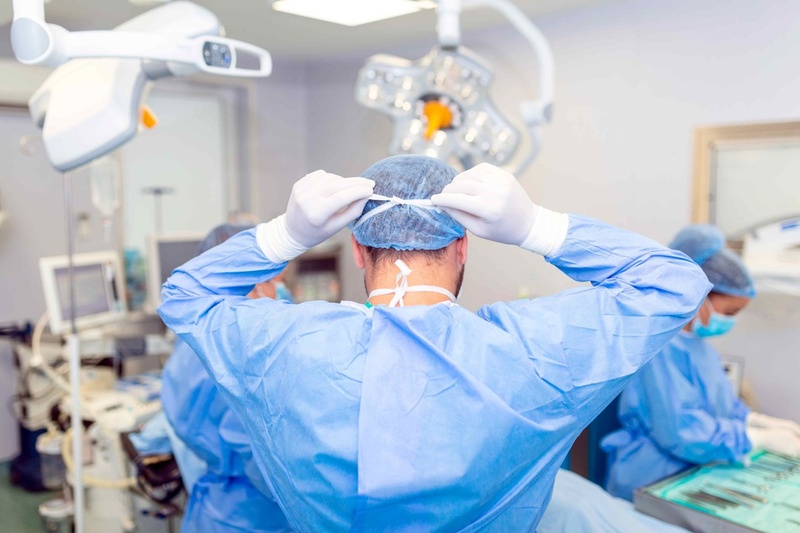
Orthognathic surgery is the surgical correction of jawbones that involve facial deformity and problems in dental occlusion. In this operation, which lasts around two hours, the mandible and maxilla are repositioned, making cuts to the bones that are fixed internally. As explained by Dr. Mareque, this operation "is done under general anesthesia, usually with a night's hospitalization, and the next day the patient can go home".
During the next few days, he will have to follow a liquid diet and, after the first week, he will gradually introduce slightly harder foods. Two or three weeks after the operation, you will be able to lead a normal life again. Then, as indicated by Dr. Mareque, it will be important to "do ambulatory checks" to maintain optimal dental health.
The head of the Dentistry and Maxillofacial Surgery Service explains that, in some cases and parallel to this surgery, there is usually an orthodontic treatment, lasting approximately between 6 and 16 months and which varies depending on the person. The combination of both treatments will be key for the result to be a success.
A surgery with a double objective: aesthetic and functional improvements
"Reducing the wear of dental parts, improving breathing and chewing, solving sleep apnea problems or reducing possible digestive problems are some of the advantages of orthognathic surgery", highlights Dr. Mareque.
But apart from these benefits at a functional level, this surgical intervention also serves to achieve aesthetic improvements, such as greater facial symmetry and, therefore, a better appearance.


